

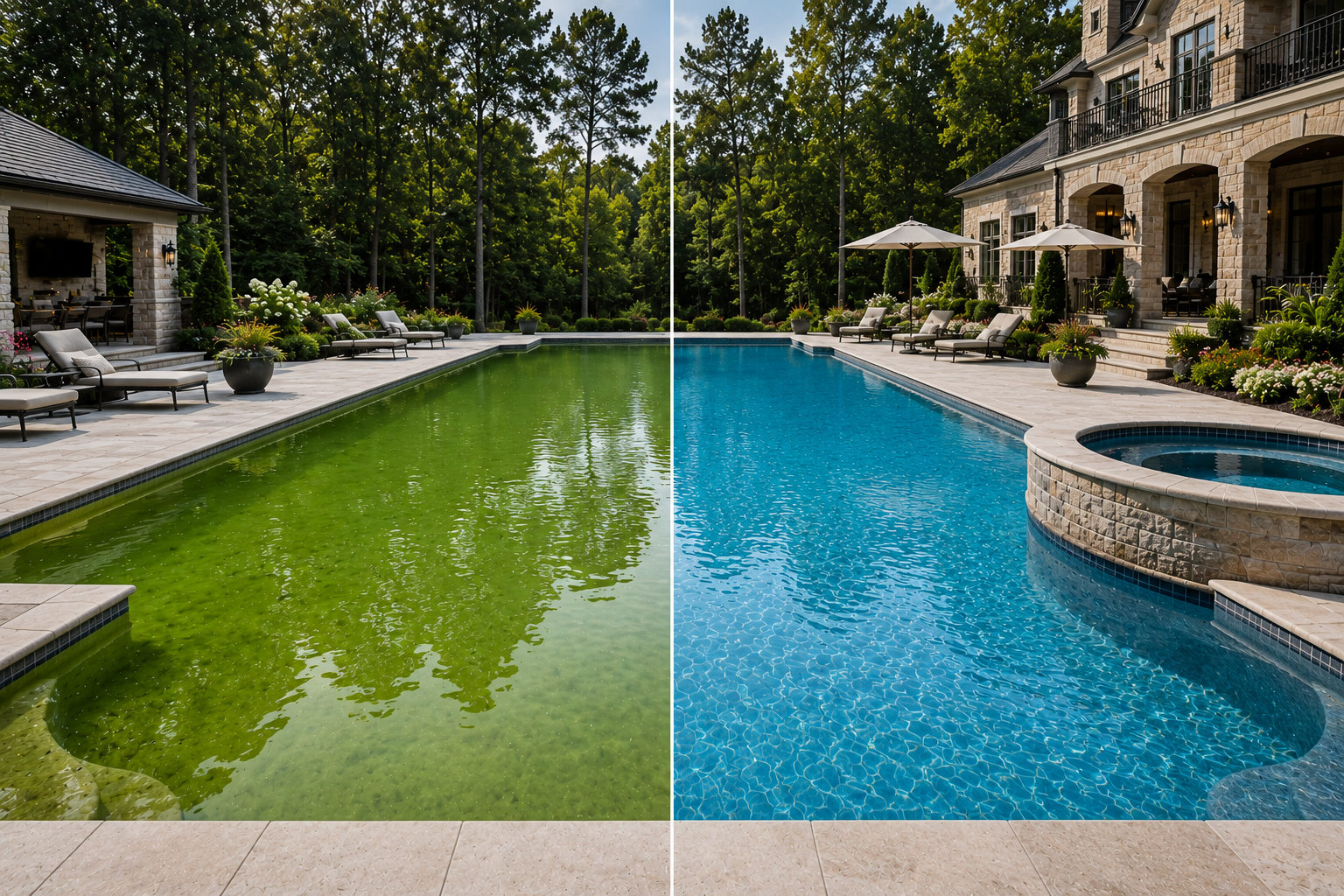
You walk out to your backyard, and the water is green. Maybe it happened overnight. Maybe it crept up on you over a few days. Either way, it's not the sight you were hoping for, and your first instinct is probably to wonder how bad it really is.
The good news: a green pool is fixable. The better news: it's fixable fast, if you approach it the right way.
Here's what's actually happening in your water, what it takes to clear it up, and when it's worth calling in a professional.
Why Do Pools Turn Green?
The short answer: algae.
Algae spores are always present in pool water; they're microscopic, invisible, and completely normal. The problem starts when the conditions in your pool allow those spores to bloom and multiply. And that happens faster than most people expect. The most common triggers:
Low or depleted chlorine.
Chlorine is your pool's primary defense against algae. When levels drop — even for 24 to 48 hours — algae can establish itself quickly. This is especially common after heavy rain, which dilutes your water chemistry, or after a stretch of hot sunny weather, which burns off chlorine faster than usual. (On a sunny day, UV rays from the sun can destroy up to 90% of your pool's free chlorine in as little as two hours)
Bather Load & Organic Contaminants
Every time someone swims, they introduce organic contaminants into the water. Chlorine immediately goes to work oxidizing these substances, which uses it up.
Human Contaminants: Sweat, body oils, saliva, urine, sunscreen, and cosmetics.
Environmental Contaminants: Leaves, pollen, dust, bird droppings, and bugs.
The Result: The more stuff that enters the pool, the faster chlorine is depleted.
Algae Growth (Visible or Microscopic)
If algae spores have taken root, your chlorine will drop rapidly as it fights to keep the bloom at bay.
Early Stages: Even before the water turns visibly green or cloudy, microscopic algae can actively consume your free chlorine. If you find yourself adding chlorine constantly just to keep a baseline reading, you might be fighting an invisible, early-stage algae bloom.
Imbalanced pH
Even if your chlorine level reads fine on a test strip, it may not be doing its job. Chlorine is dramatically less effective when your pool's pH is off. An imbalanced PH can cut chlorine's effectiveness by more than half.
Cyanuric Acid (CYA) acts as a "sunscreen" for chlorine, protecting it from being destroyed by UV rays. However, it requires a strict balancing act.
Too Low: Sunlight can destroy 90% of your pool's free chlorine in just two hours, leaving the water unprotected.
Too High: It causes "chlorine lock." The CYA binds so tightly to the chlorine that it prevents it from sanitizing, making the pool susceptible to algae even if your chlorine tests high.
Poor Circulation
Algae loves still water. If your pump isn't running long enough each day, or if there are dead spots in your pool where water doesn't move well, those are the areas where green starts first.
Missed Maintenance
Everyone skips a week of pool care at some point: vacation, a busy stretch, or just life getting in the way. One missed treatment during warm weather is often all it takes.
How Serious Is It?
Green water isn't just an eyesore. Swimming in algae-infected water isn't safe; it can cause skin and eye irritation and, in some cases, harbor bacteria (creating a thriving ecosystem for hazardous bacteria and pathogens that pose real health risks). Contaminated water can cause Pseudomonas aeruginosa infections, leading to "hot tub rash" (itchy, red bumps) and outer ear infections (swimmer’s ear), along with other more severe infections that can occur. Beyond the health concern, algae also puts stress on your filtration system and can stain your pool surfaces if left untreated.
A light green tint caught early is usually a straightforward fix. A pool that's gone deep green or black-green, where you can't see the bottom, has a more significant algae load and will take more aggressive treatment and multiple steps to recover.
What It Takes to Fix a Green Pool
This is where things get more involved than most homeowners expect. Clearing a green pool isn't just a matter of pouring in extra chlorine and waiting.
Step 1: Test and Balance the Water Chemistry First
Before shocking, you need to know what you're working with. Proper water balance is essential for treatments to work. If the baseline levels are off, the corrective products you add won't be effective. Always stabilize the water first before trying to treat it.
Step 2: Shock Treatment
Shocking the pool with a heavy dose of chlorine is the only way to completely kill an algae bloom. Don't panic when the water turns cloudy or gray afterward; that color shift is a great sign that the algae is dead and the treatment is working.
Step 3: Brush Every Surface
This is the crucial step most DIYers mess up. While you can do it yourself, it's best handled by someone with the experience to know exactly how to scrub different pool surfaces without damaging them.
You have to brush every single surface: walls, steps, and tight corners. Algae forms a protective layer that clings tightly to these areas, and physically brushing it breaks up the colonies so the chlorine can actually reach and destroy them.
Step 4: Run the Filter Continuously
When a pool turns cloudy from dead algae, that debris has to go somewhere. Here is the difference between tackling it yourself and letting a professional handle it.
The DIY Approach (Filter Stress):
To clear the water, a standard homeowner has to run their pool filter continuously—24 hours a day—for days on end. Because dead algae loads up the system incredibly fast, you have to constantly backwash or clean the cartridges. This intense pressure puts your entire filtration system in a vulnerable position, risking high-pressure damage or premature wear on your equipment.
We at AB Premium do things differently to safeguard your investment. At this critical stage, we completely bypass your pool's filtration system. Using our specialized commercial vacuuming and external circulation equipment, we capture and remove the heavy algae, dirt, and debris directly from the pool. Only after the bulk of the waste is entirely gone do we reintroduce clean water to your filters, preventing strain, clogs, and costly damage to your pumps and equipment.
Step 5: Retest and rebalance.
Once the water clears, chemistry needs to be fully retested and brought back into ideal range for safe swimming.
In most cases, a mild to moderate green pool can be recovered in 24 to 72 hours. Severe cases, deep green water, and significant algae buildup on surfaces can take a little longer.
DIY vs. Professional Green Pool Treatment
You can attempt a green pool recovery on your own. But there are a few reasons homeowners in the Charlotte area often call a professional instead:
Misjudging the Chemistry
If you over-shock without balancing the water chemistry first, the shock will not work as it is supposed to, and you risk bleaching pool surfaces or causing equipment damage. Under-treating just gives the algae a chance to come back.
Underestimating the Filter Load
One of the most common DIY mistakes is not cleaning the filter during recovery. A clogged filter just recirculates dead algae rather than removing it.
Time
A proper green-to-clear treatment involves multiple visits, retesting, and follow-up. For most busy homeowners, that's more time than a weekend allows.
At AB Premium Aqua Solutions, our Green-to-Clear Algae Treatment service handles every step, from diagnosing the root cause to the final chemistry check that confirms your pool is swim-ready. Most of our Charlotte-area clients are back in the water within two to three days.
How to Prevent Algae from Returning
Once your pool is crystal clear, preventing a relapse comes down to consistency. Establishing a routine maintenance schedule stops algae spores before they ever have a chance to take root.
Maintain a Constant Sanitizer Baseline
Never let your sanitizer levels bottom out, even for a brief period. Keeping a consistent, steady baseline of protection is your first and most important line of defense against organic growth.
Keep Your Water Chemistry Balanced
Regularly test and adjust your water’s pH levels. When your water chemistry is perfectly balanced, it ensures your sanitizer can operate at peak strength and maximum efficiency.
Ensure Adequate Daily Circulation
Stagnant water is an open invitation for algae. Make sure your pump runs long enough every single day during the warmer months to keep the water moving, filtered, and evenly chemically treated.
Commit to Regular Brushing
Don't wait until you see a problem to take action. Weekly brushing of the walls, steps, and tight corners disrupts microscopic algae colonies before they can visibly take hold of your pool surfaces.
By staying ahead of these core maintenance steps, you keep your water safe, clear, and beautiful all season long.
Ready to Get Your Pool Back?
If your pool has already gone green, don't wait it out — it won't clear on its own, and the longer you wait, the more work it takes to fix.
Book a Free Estimate, and we'll come take a look, assess the situation, and tell you exactly what it will take to get your water crystal clear again.
No obligation. No pressure. Just honest, expert advice.
AB Premium Aqua Solutions serves homeowners across Charlotte, Mooresville, Cornelius, Huntersville, Fort Mill, Waxhaw, and 18 communities in the greater Charlotte area. See our full service area →
